10% off on your first order USE CODE: FIRST10

Get 15% off on your Second Order

Get Rs. 200 off on Prepaid Order

Your cart

Your cart is empty

AjrakhHistoryAjrakhPrintArtisanMade

Before Ajrakh Became Fashion: The Story Behind the Print

Before Ajrakh Became Fashion: The Story Behind the Print
Where It All Began: The Origins of Ajrakh
A PRINT WITH A STORY

Where It All Began: The Origins of Ajrakh

That beautiful indigo print in your wardrobe has a story that goes back thousands of years.

You may know Ajrakh for its deep indigo, earthy reds and intricate geometric patterns. But Ajrakh is much more than a beautiful handblock print.

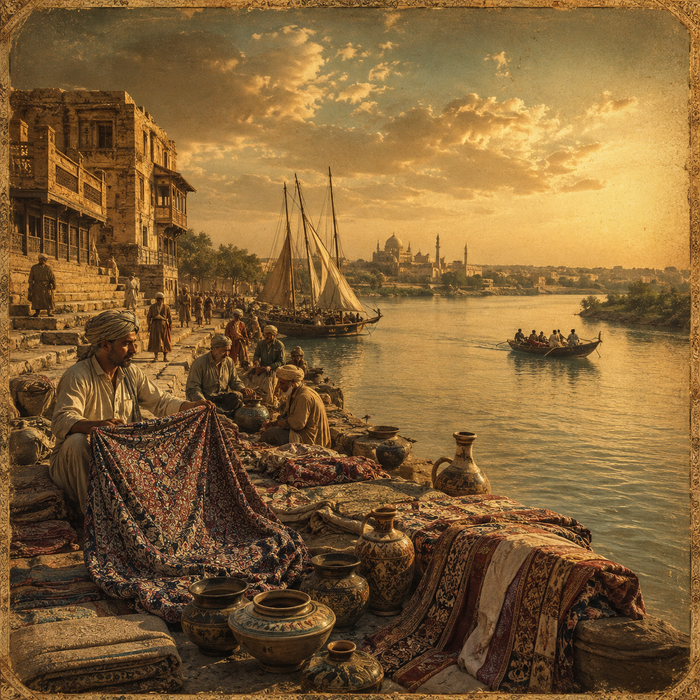
Its roots are believed to go back around 4,000 years to the Indus Valley region, particularly the Sindh area. The Indus River played an important role in the craft, providing the water needed for washing and dyeing fabrics, while indigo became one of its signature colours.

So, how did this ancient craft become the Ajrakh we know today?

From Sindh to Kutch

From Sindh to KutchFrom Sindh to KutchFrom Sindh to KutchFrom Sindh to Kutch
How Ajrakh Found Its Way to India
WHERE THE JOURNEY BEGAN

How Ajrakh Found Its Way to India

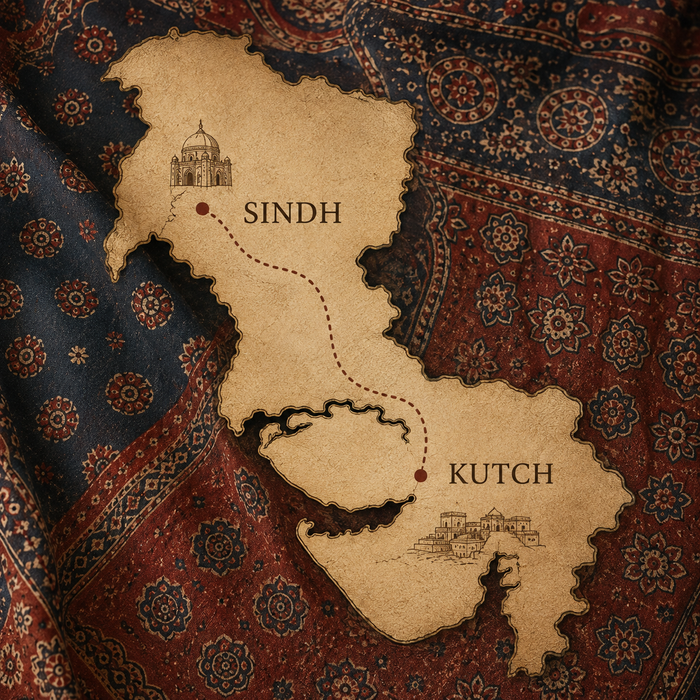
Ajrakh is closely connected with the Sindh–Kutch region.

Over time, Khatri artisan families from Sindh moved to Kutch, where they continued and developed the craft. According to traditional accounts, Kutch's ruler Rao Bharmalji invited craftsmen from Sindh around 400 years ago, helping establish Ajrakh printing in the region.

And this wasn't simply a change of location.

The artisans adapted the craft to their new surroundings while continuing the traditional techniques that made Ajrakh distinctive.

But Why Is It Called Ajrakh?

This is where the story gets a little more interesting.

There are several theories about the name Ajrakh.

One connects it to the Arabic word “Azrak,” meaning blue, referring to the important role of indigo in Ajrakh printing. Another theory links it to the Sanskrit phrase “A-jharat,” meaning something that does not fade.

There are also folk stories surrounding the name, which have been passed down through generations.

So while there isn't one universally accepted explanation, the name itself has become part of Ajrakh's fascinating history.

THE ART BEHIND THE PRINT

What Makes Ajrakh So Special?

If you've ever wondered why Ajrakh doesn't quite look like other handblock prints, the answer lies in its combination of colour, geometry and repetition.

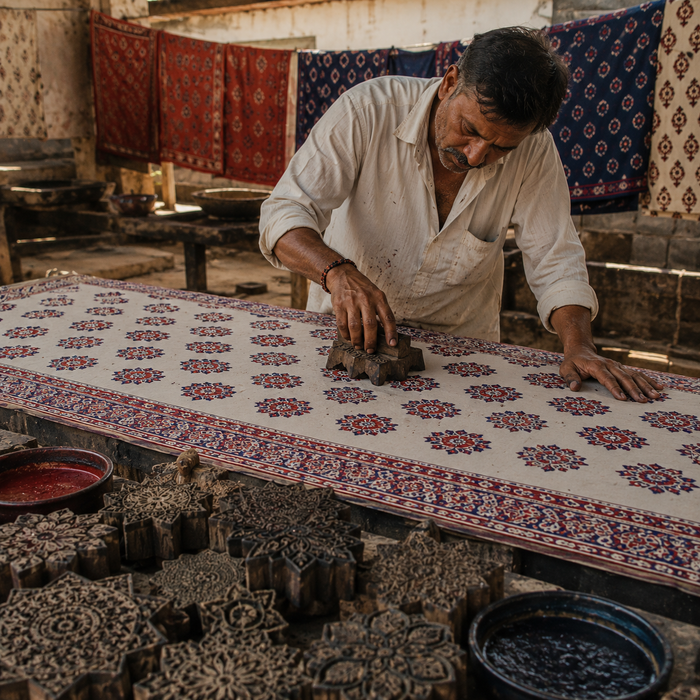
Traditional Ajrakh is known for symmetrical layouts, geometric forms, floral-inspired motifs and intricate borders. Deep indigo and red are particularly characteristic of the craft.

There is also something wonderfully satisfying about the way the motifs repeat.

Look closely and you'll often find stars, flowers, leaves, circles, grids and other geometric elements working together.

It feels detailed without feeling random.

And that's probably one of the reasons Ajrakh works so beautifully even in modern silhouettes.

From Traditional Craft to Modern Fashion
FROM HERITAGE TO YOUR WARDROBE

From Traditional Craft to Modern Fashion

For generations, Ajrakh was closely connected to the everyday clothing and cultural identity of communities across Sindh, Kutch and the surrounding regions.

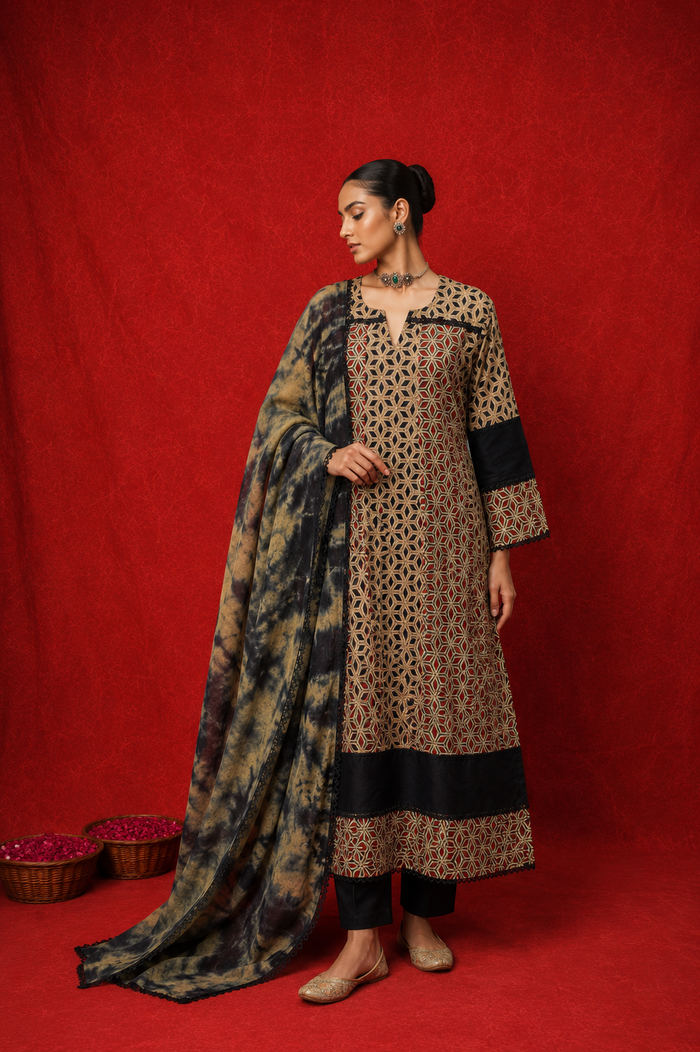
Today, you'll find it in Ajrakh kurtas, dresses, sarees, co-ord sets and contemporary ethnic wear.

And honestly, that's what makes Ajrakh so interesting.

It has travelled from an ancient textile tradition into modern wardrobes without losing the character that makes it recognisable.

At Naseebo, we love bringing that story into contemporary silhouettes—because traditional doesn't have to mean old-fashioned.

FROM HERITAGE TO YOUR WARDROBE

Conclusion

Ajrakh may be everywhere in fashion today, but its story is anything but new.

From its roots in the Indus Valley region thousands of years ago to its journey from Sindh to Kutch and its place in modern fashion, Ajrakh has continued to evolve while staying connected to its craft heritage.

And perhaps that's the real beauty of Ajrakh.

It's not a print that became timeless.
It's a craft that never stopped being relevant.

Explore the Edit

Shop Now →

Follow along

For everyday styling, new arrivals and behind-the-scenes from the atelier.